
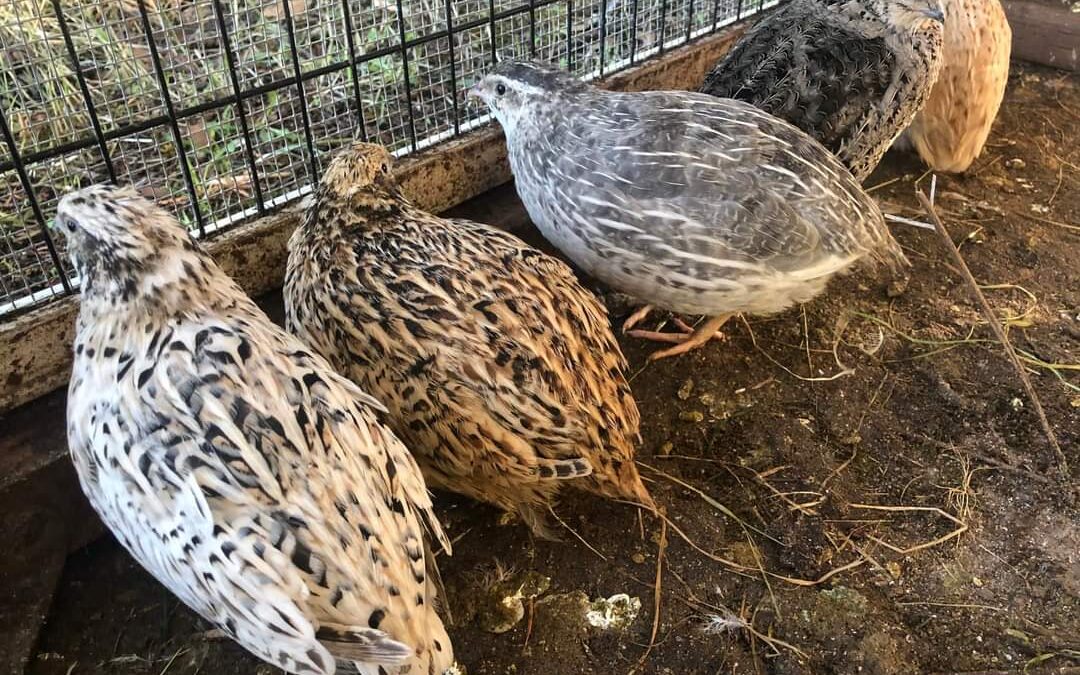
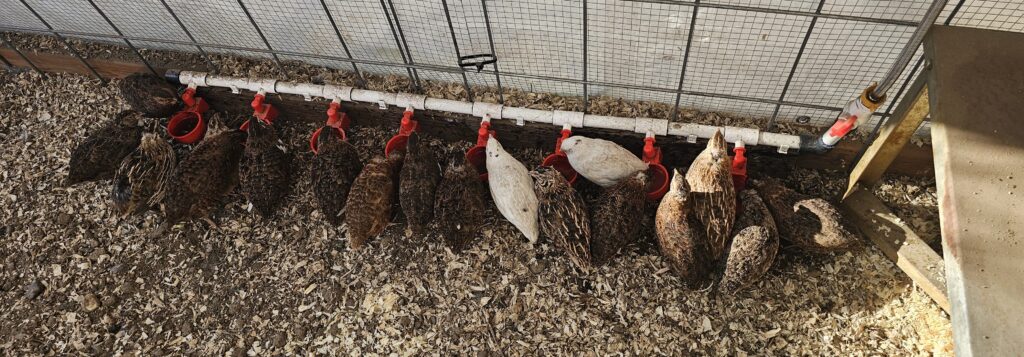
Here’s a sentence I never expected to say: my food security plan is twenty-three tiny dinosaurs in the backyard.
It started in 2020, when the pandemic hit and supply chains got weird. I was living in Portland, and I got it in my head that I wanted a protein source that didn’t depend on a grocery store. Chickens were the obvious answer, but quail won the argument: smaller, faster, quieter (mostly — we’ll get to that), and a genuinely fantastic survival food. Then my local Buy Nothing group coughed up a free chicken coop, and we carried the thing three blocks home, because that’s what you do when the world is ending and the universe hands you a coop.
Around the same time, I stumbled across the most adorable blue Celadon quail eggs on Craigslist and decided to go on an adventure. My mom had an incubator. We hatched out a few eggs — with very mixed success, as is tradition. (Fair warning if you go the Celadon route: those blue eggs are prone to defects and don’t hatch out nearly as well as regular ones, which is very sad. We eventually, sensibly, just bought a bunch of chicks.)
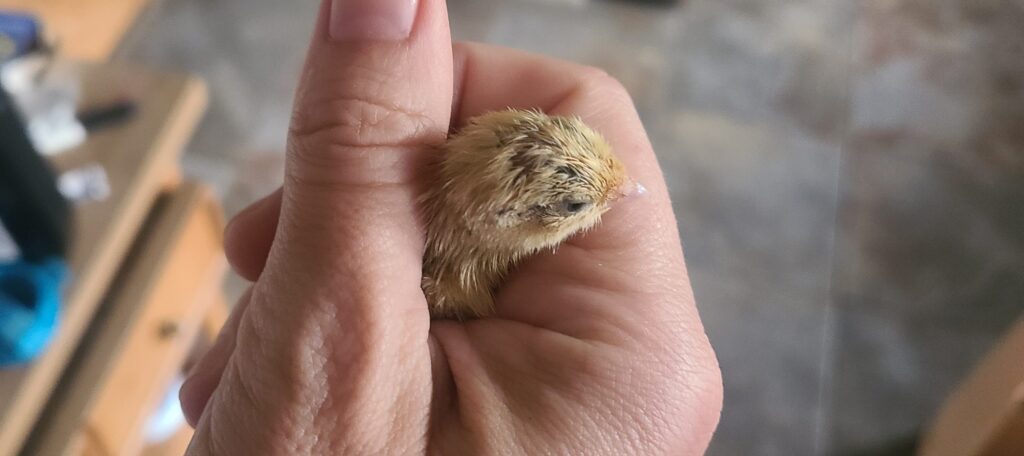
I’ve stopped and started the whole operation a few times since. Life happens. But the quail keep making the case for themselves, and right now the covey is twenty-three strong, with a Very Expensive Incubator standing by for the day I get my act together and hatch out the next generation.
Why quail specifically
If you’re picturing a chicken operation — coop politics, noise complaints, a rooster with a grudge — quail are a different prospect entirely:
They’re small-space animals. A covey lives comfortably in a raised enclosure on a patio. No acreage required. Ours is a little bigger than that – it cost about $500 to build (plus some cursing) and is rated for up to 96 birds — though that seems crowded to me, and the quail have not been consulted.
They’re fast. Quail start laying at six to eight weeks old. Chickens take five or six months. From “I should get birds” to “omelet” in two months flat.
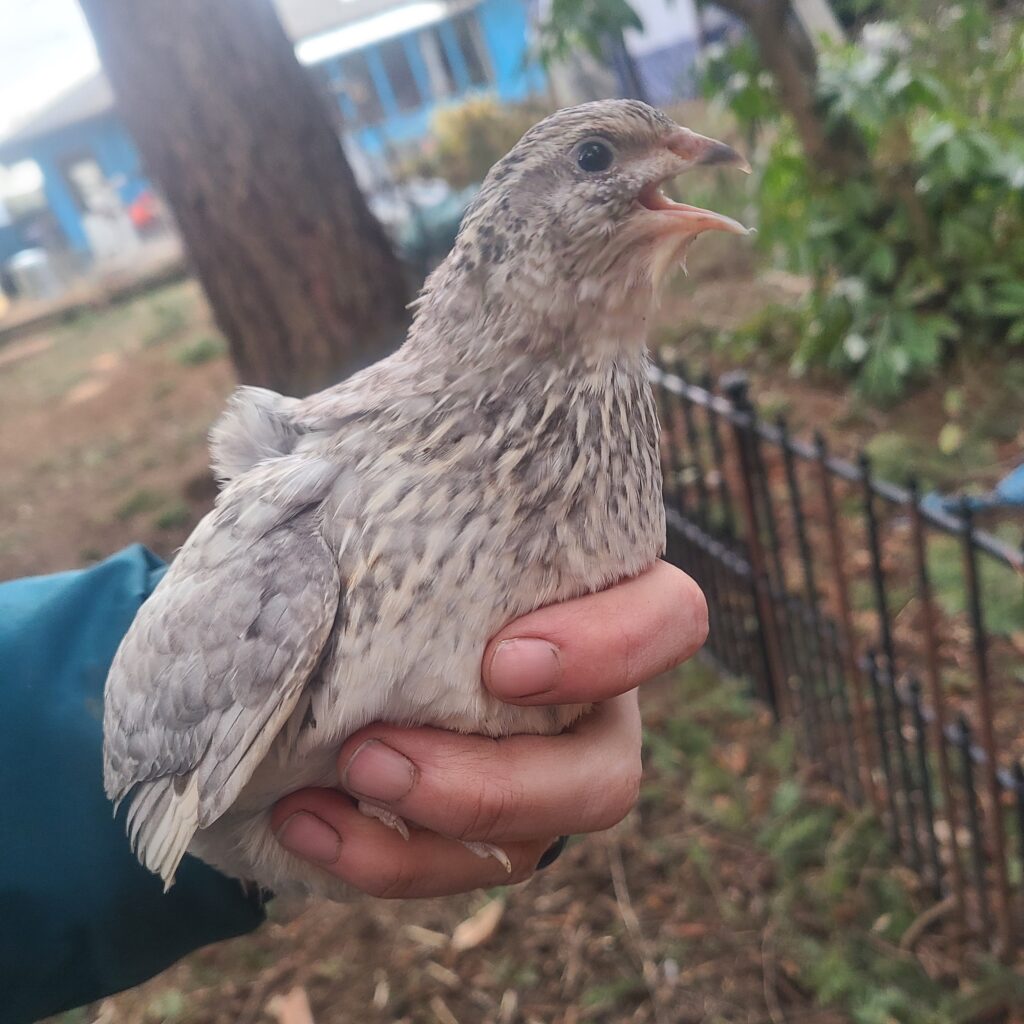
Hens are quiet; roos are… a self-solving problem. The hens trill softly, like crickets. The males are loud and annoying (though still quieter than roosters by a long shot) — and conveniently, they’re also a fantastic source of quick, fresh protein. Surplus roos become dinner; quail enthusiasts call it “sending them to freezer camp.” I butcher them myself, and for a histamine-sensitive kitchen, yard-to-freezer the same day is about as good as meat gets. The honest catch: processing is simple, but a bit of a project. The feathers are the worst part (yuck), so until I get the brooder pen, bachelor pen, and a mechanical plucker sorted, roo dinners are an occasional event rather than a staple. Circle of life, homestead edition — and it keeps the peace in the covey and the neighborhood both.
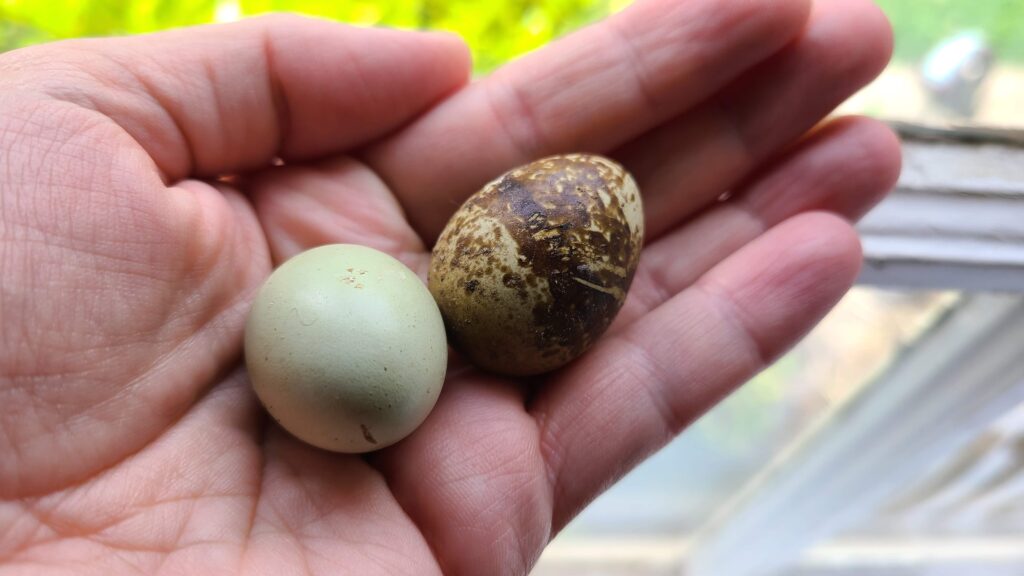
The eggs are small but mighty. Three to four jumbo quail eggs equal one chicken egg — and they come in speckled shells so pretty that breakfast feels like an event.
The low-histamine angle
Here’s where the quail stop being a pandemic project and start being a medical one. On a low-histamine diet, freshness isn’t a preference — it’s the whole game. Histamine builds in food over time, and store eggs can be weeks old before they even hit the shelf. On top of that, I don’t tolerate chicken eggs well — but quail eggs? My body is fine with those.
So the math was simple: I needed eggs measured in hours since laid, not weeks — and meat that goes from yard to freezer the same day, which is about as low-histamine as protein gets. The grocery store couldn’t sell me that. Twenty-three tiny dinosaurs could.
Two honest caveats, because I promised you honesty on this site: eggs are one of those foods where tolerance is deeply individual — some histamine-sensitive folks handle them fine, others react to egg whites specifically. And quail eggs aren’t magic; they’re just my answer to the chicken-egg problem. As always: your tolerance is the final list, and new foods get tested one at a time.
Bonus: they’re more than just fresh
It turns out quail eggs have a genuine research trail behind them, not just folklore. In laboratory studies, quail egg white acts as a mast-cell stabilizer — dialing down the release of histamine, tryptase, and inflammatory cytokines from the very cells at the center of allergic reactions. (2025 review) The idea goes back to 1970s France, where a doctor noticed quail farmers had fewer allergy symptoms than their neighbors; small clinical trials since then — including randomized, placebo-controlled ones — have found quail-egg supplements ease allergic rhinitis symptoms. (study) The evidence is early-stage — small studies, bigger ones needed — but it’s a real signal.
The giant caveat, in bold because it matters: quail and chicken eggs share the same major allergen proteins, and cross-reactivity runs both ways. If you have a true egg allergy, quail eggs are a “talk to your allergist first” food, not a “try it and see” food. My tolerance is my own data point — nothing more.
What it actually takes
The daily reality, for anyone tempted:
Morning: collect eggs, check water. Five minutes, and you get an easter egg hunt every morning.
Weekly: refresh bedding, top up feed, clean out water cups, admire the birds. Fifteen minutes.
Setup: an enclosure, a feeder, a waterer, and birds. Expect at least $500 if you’re building something solid, less if the Buy Nothing group loves you.
Personality: quail are not cuddly. They are tiny, skittish, comedic. They will startle themselves straight into the air for no reason. I consider this entertainment and factor it into the ROI.
Is it for everyone? No. But if you have a patio, a restricted diet, and a fondness for self-sufficient breakfast, it’s one of the highest-yield homestead projects per square foot there is.
The bigger picture
The quail are part of a larger project here: a food supply I don’t have to read labels on. Pea shoots on the windowsill for fresh greens (bonus: they’re the plant source of DAO, the enzyme at the center of this whole story). Seeds saved from the garden. Sweet potatoes harvested before the frost. The freezer stocked in labeled cubes.
None of it is fancy. All of it is mine — and for a body that treats the industrial food supply like a minefield, that matters more than I can say.
More homestead notes to come. The tiny dinosaurs insist.
Curious about the rest of the system? Start with The Cube Method — and grab the free kits to see it in action.